Winter weather brings an array of challenges, one of which is the icy conditions that form on roads, sidewalks, and driveways. To combat these treacherous ice layers, many turn to salt, a traditional de-icing method. But ever wondered exactly what happens at a molecular level when salt meets ice? Let's dive deep into the science to decode the intriguing relationship between salt and ice molecules.
The Intricate Dance Of Water Molecules
Water, in its solid state as ice, is formed when its molecules arrange themselves in a specific pattern, creating a lattice. This occurs because water molecules are attracted to each other, forming hydrogen bonds that keep them in place. However, this stable formation exists only at or below freezing temperatures.
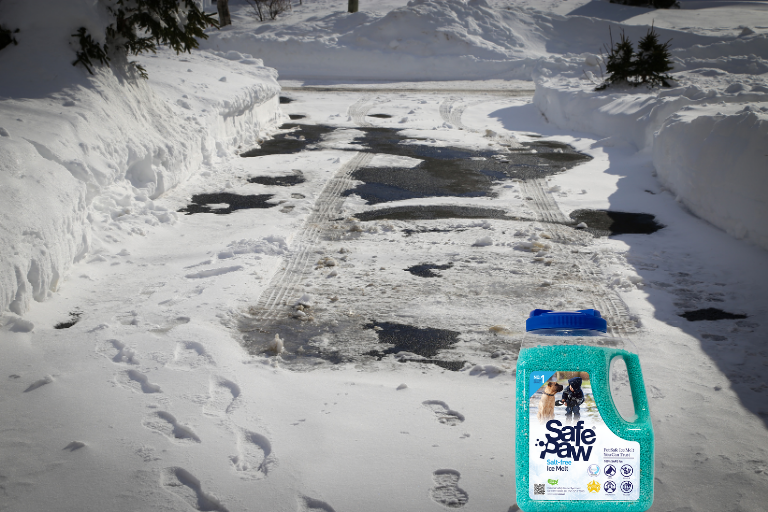
Pet Safe Ice Melt
Disrupting The Equilibrium: Here Comes The Salt
When salt is sprinkled onto ice- what does salt do to ice? It begins to dissolve, breaking apart into its constituent ions. These ions disperse among the water molecules, disrupting their ability to form the rigid lattice structure of ice. The result?
- Lowered Freezing Point: With salt present, water now requires a lower temperature than 0°C (32°F) to freeze. This phenomenon is known as freezing point depression. The ice that's already formed begins to melt since the surrounding temperature is no longer cold enough to sustain it in its solid state.
- Melting and Refreezing: As the ice melts into water in the presence of salt, it might refreeze if the temperature drops again. However, because of the presence of salt, this refreeze happens at a much lower temperature, making it less likely to occur in typical winter conditions.
The Side-Effects: Not All Rosy
While salt's ability to melt ice is undeniably useful, it comes with several downsides:
- Environmental Concerns: Salt runoffs can contaminate water sources, affecting aquatic life. The increased salinity can disrupt the delicate balance of freshwater ecosystems.
- Infrastructure Damage: Salt can be corrosive to metals, leading to rusting and deterioration of vehicles and infrastructure.
- Vegetation Damage: Plants alongside roads and sidewalks can suffer from increased salt levels, inhibiting their growth and causing them to wither.
Pets And Salt: A Cautionary Tale
Another significant concern that often goes overlooked is the impact of salt on our furry companions. This ties into our secondary topic, answering the question, "is salt bad for dogs?"
- Paw Irritation: Walking on salt-covered surfaces can lead to dryness, cracks, and irritation in a dog's paws.
- Toxicity Concerns: If dogs ingest salt, either by licking their paws or directly from the ground, it can lead to salt poisoning. Symptoms include vomiting, diarrhea, lethargy, and in severe cases, it can even be fatal.
https://youtu.be/Hk4_b-Yc3bQ
A Better Alternative: Safe Paw Ice Melt
Understanding ‘what does salt do to ice’, especially for our pets, it's clear that homeowners and city officials need an alternative. Enter Safe Paw:
- Gentle on Surfaces: Safe Paw's non-corrosive formula ensures that surfaces, whether it's cured concrete or metal, remain unharmed.
- Safety for All: No more worrying about your children or pets coming into contact with harmful chemicals. Safe Paw is designed to be safe even if ingested.
- Efficient and Effective: Its concentrated formula means less product covers more ground. Plus, it offers lasting protection, keeping surfaces ice-free for up to 72 hours.
- Eco-conscious Choice: By opting for a product free from salt, chlorine, and acetate, you're making an environmentally sound decision.
- User-friendly: The consumer jug design ensures that you can use it immediately, making it perfect for immediate walkway use.
Wrapping Up
Understanding "what does salt do to ice" takes us on a journey from molecular interactions to broader environmental and health implications. While salt may offer a quick fix, its repercussions, especially for our four-legged friends, make it less than ideal. In our pursuit of safer winter environments, products like Safe Paw emerge as the responsible and efficient choice.
https://safepaw.com/?p=9893


Comments
Post a Comment